
Pain and mobility
Gout
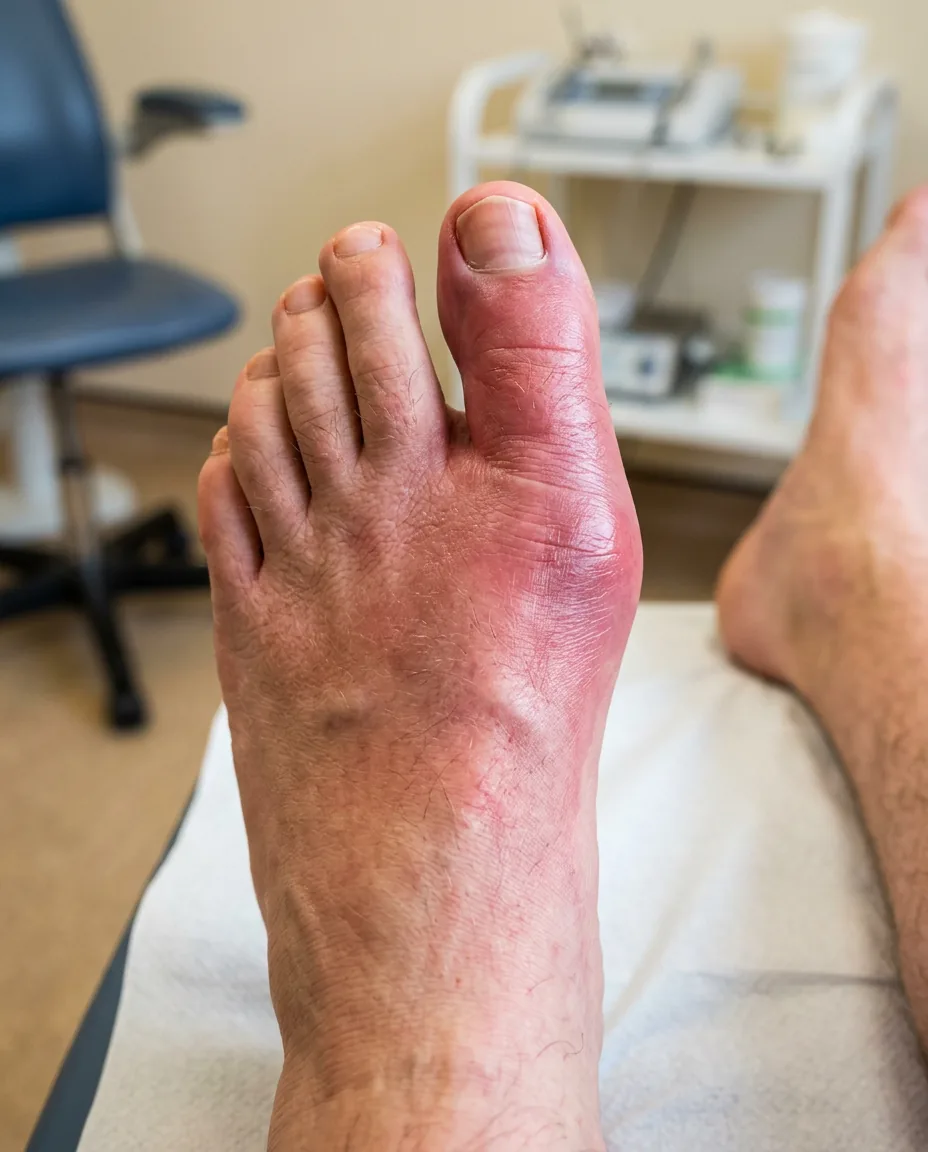
Gout usually announces itself in the big toe joint, overnight, and it is one of the most painful things that happens to a foot. The treatment that stops it coming back is a prescription from your GP. What we do is recognise it, protect the joint, and make sure you are not left guessing.
Treatment Summary
How long
30 minutes
What it costs
£35
No new patient fee.
Getting in
Free parking at the Tesco next door, under a minute's walk.
What we do
Does it hurt
A joint in an acute attack is exquisitely painful and we do not press it. We look, we ask, and we work around it. Nothing we do will make an attack worse.
A short line in a patient's own words goes here, once we have a real one to use.
Placeholder — name and town go here.
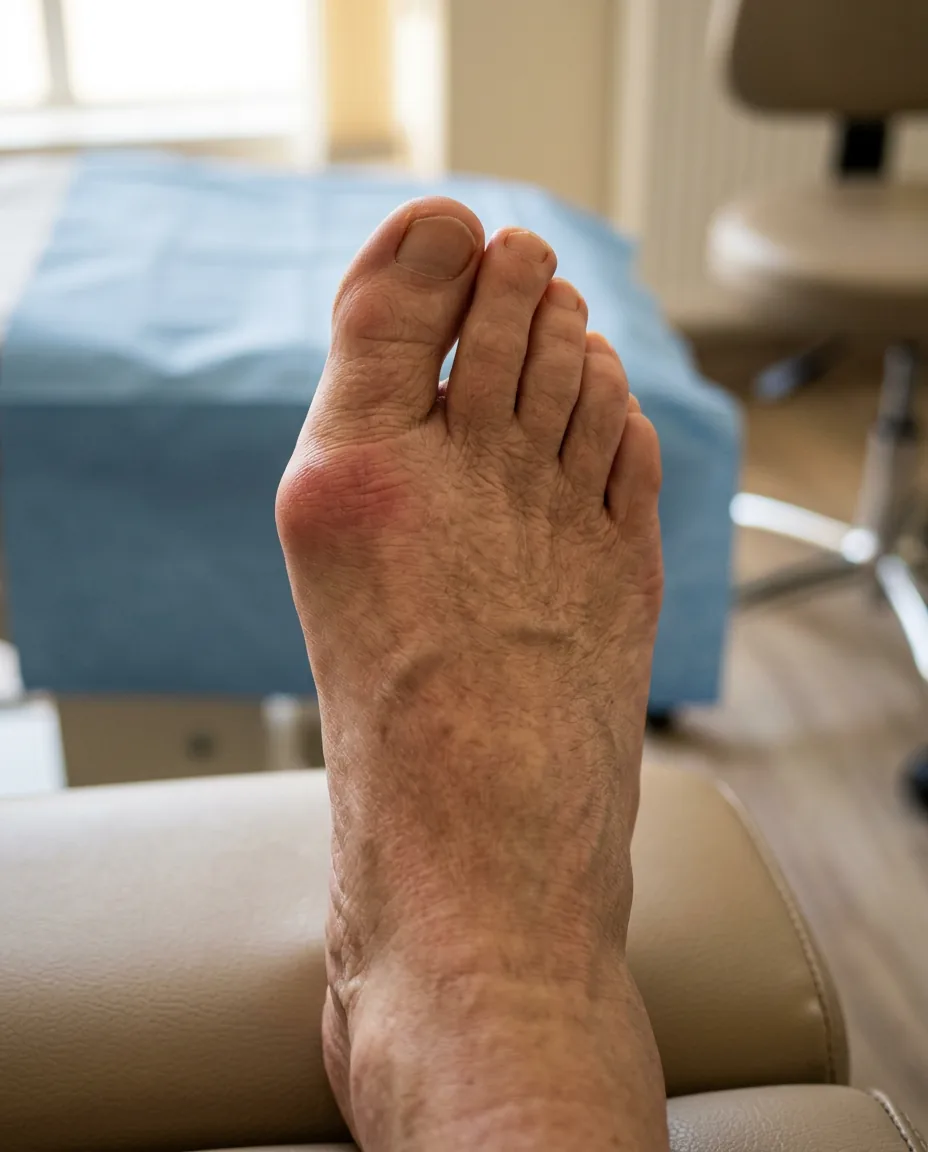
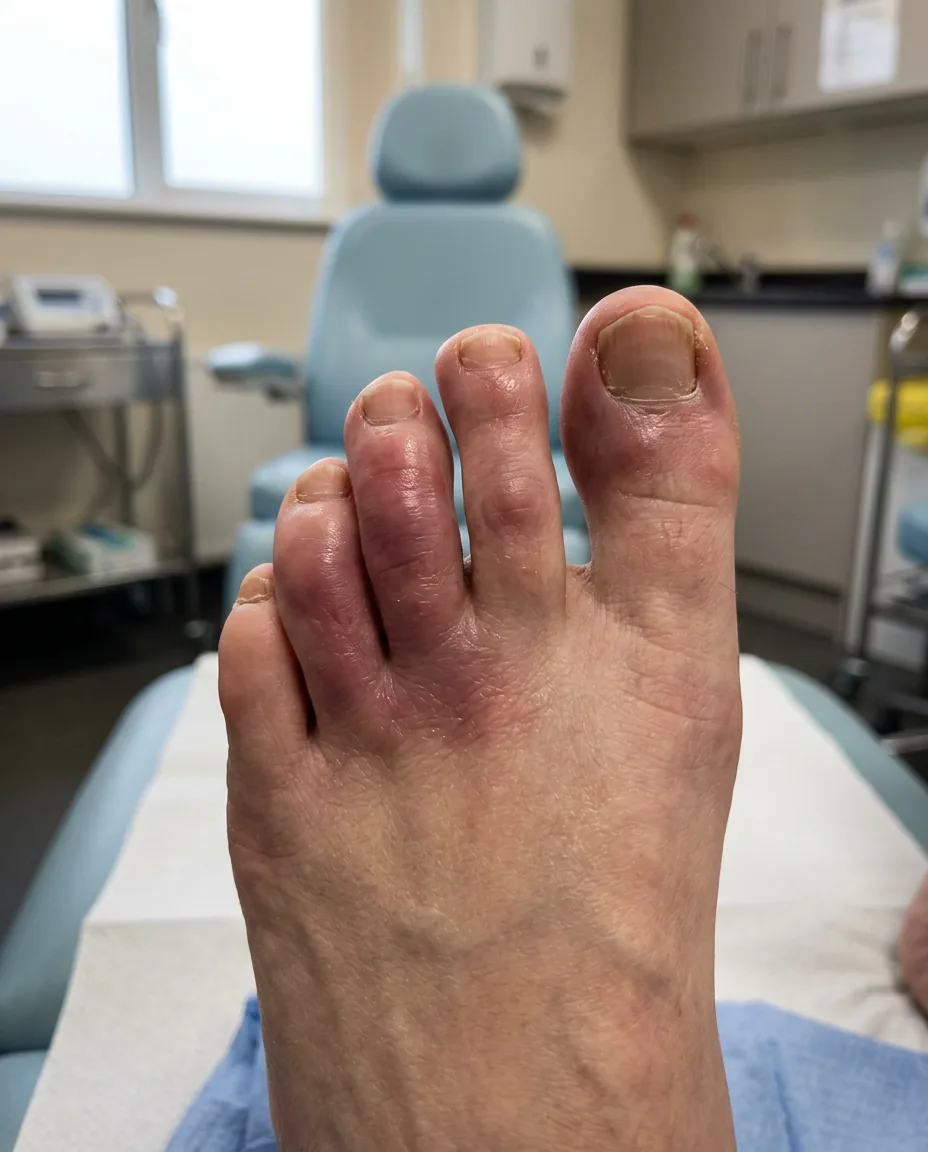
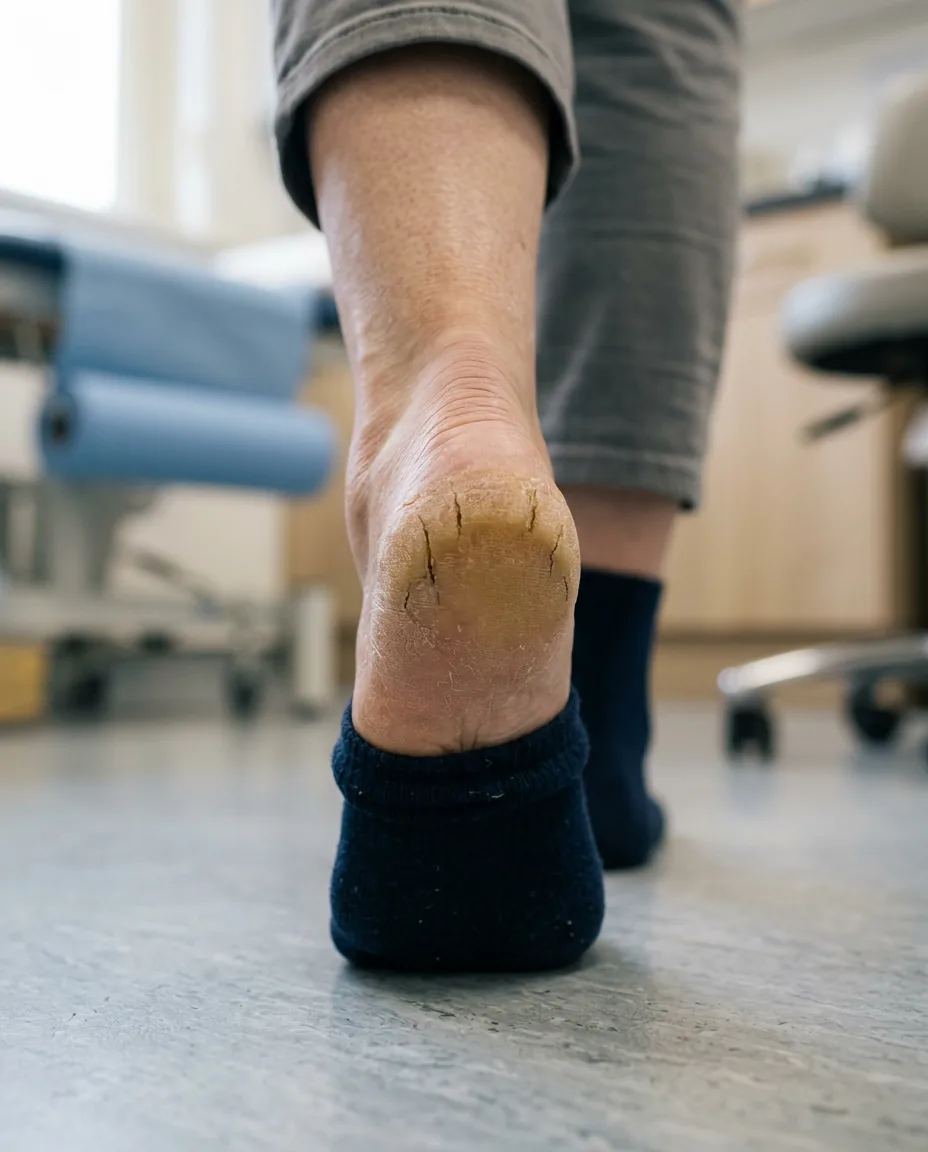
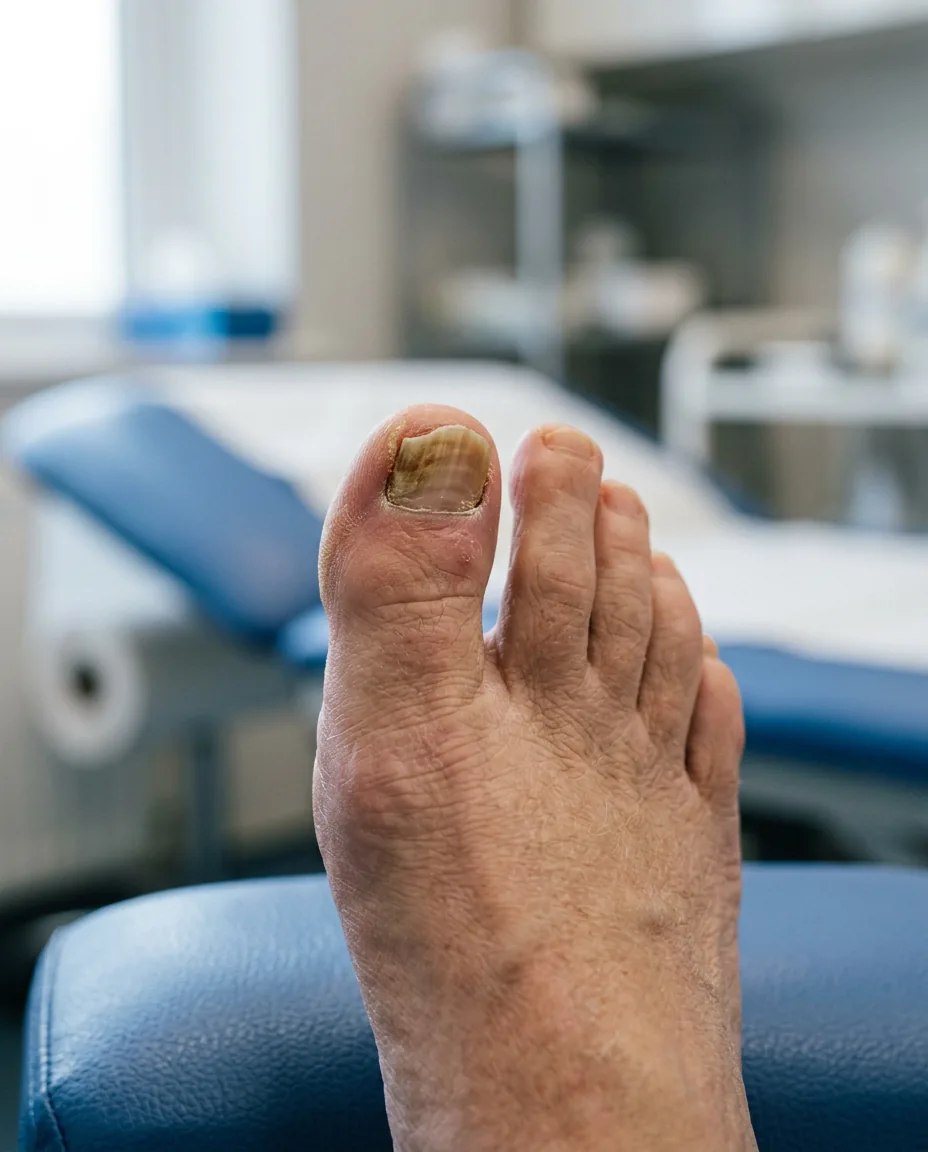
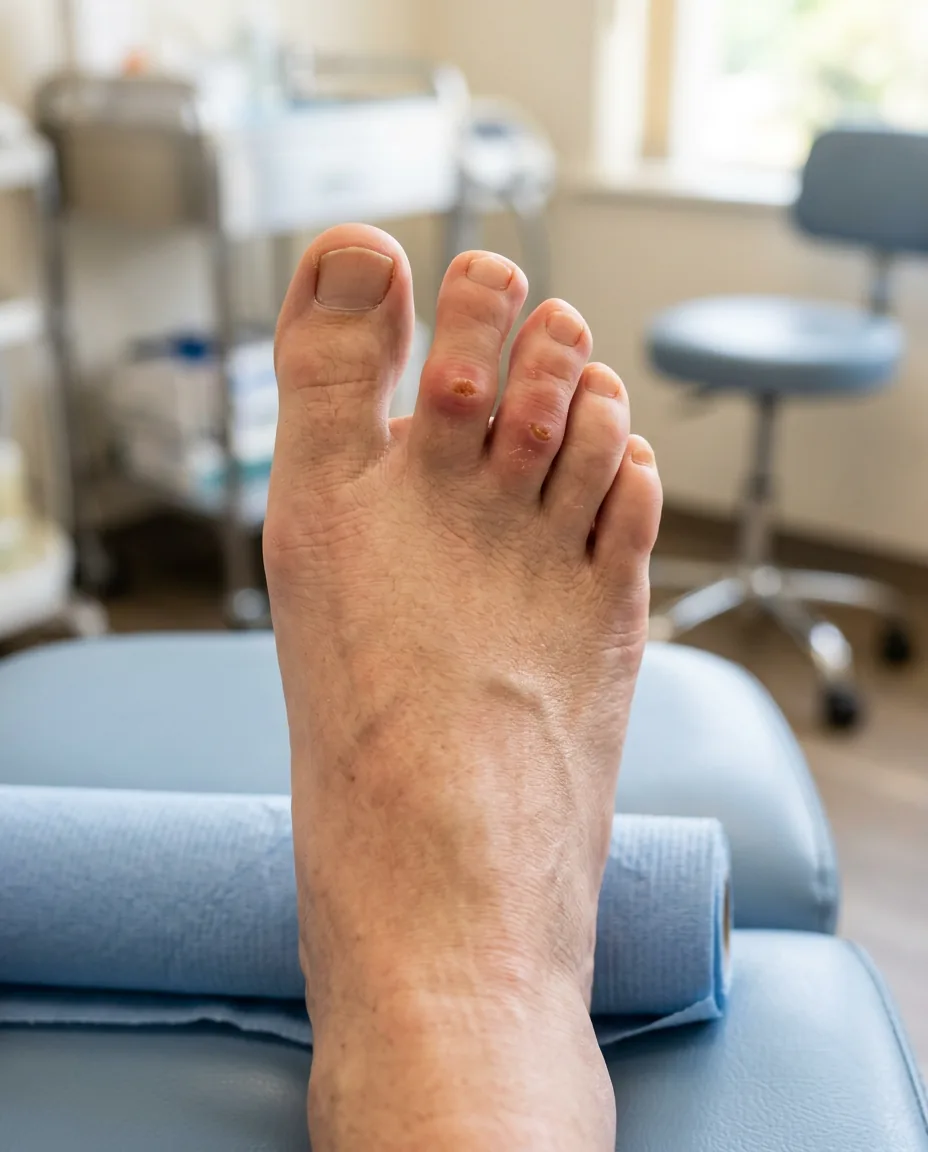
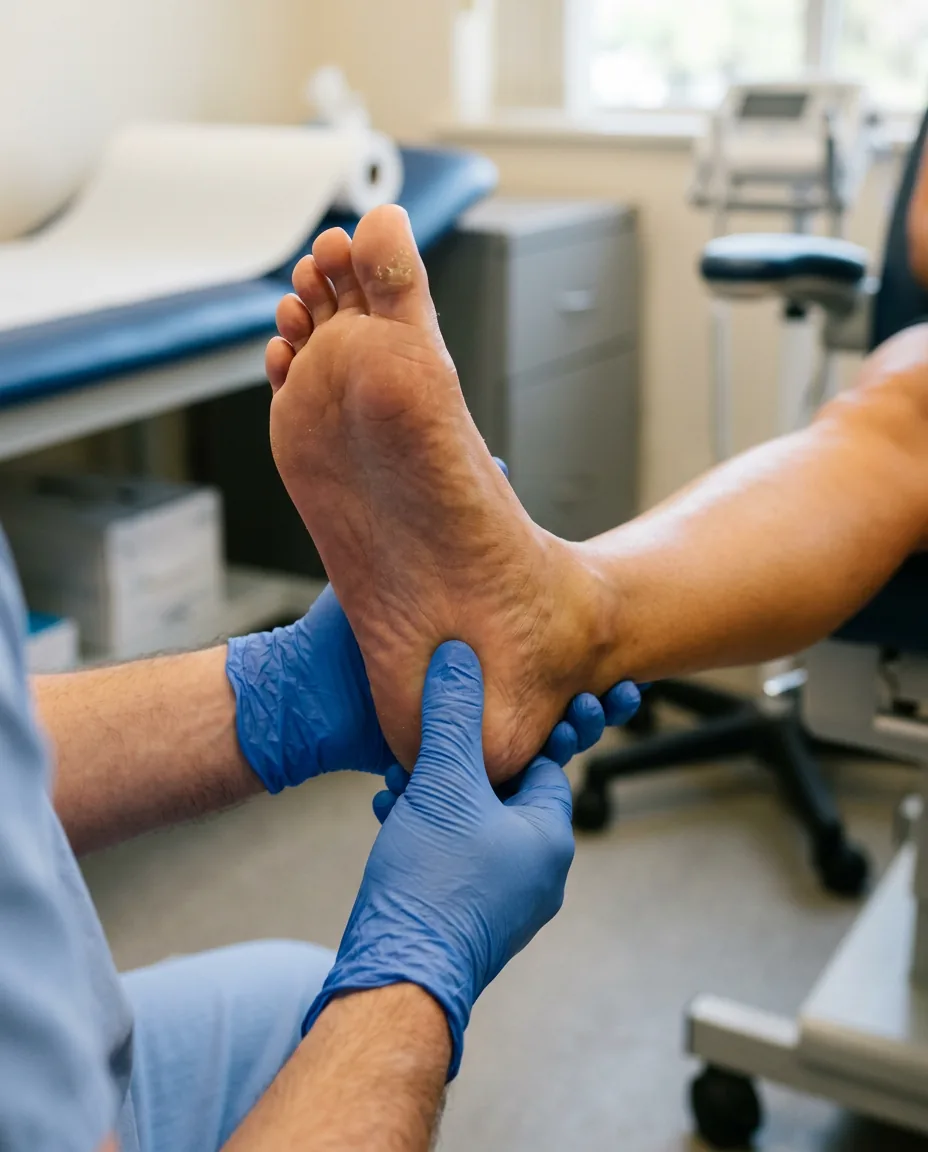
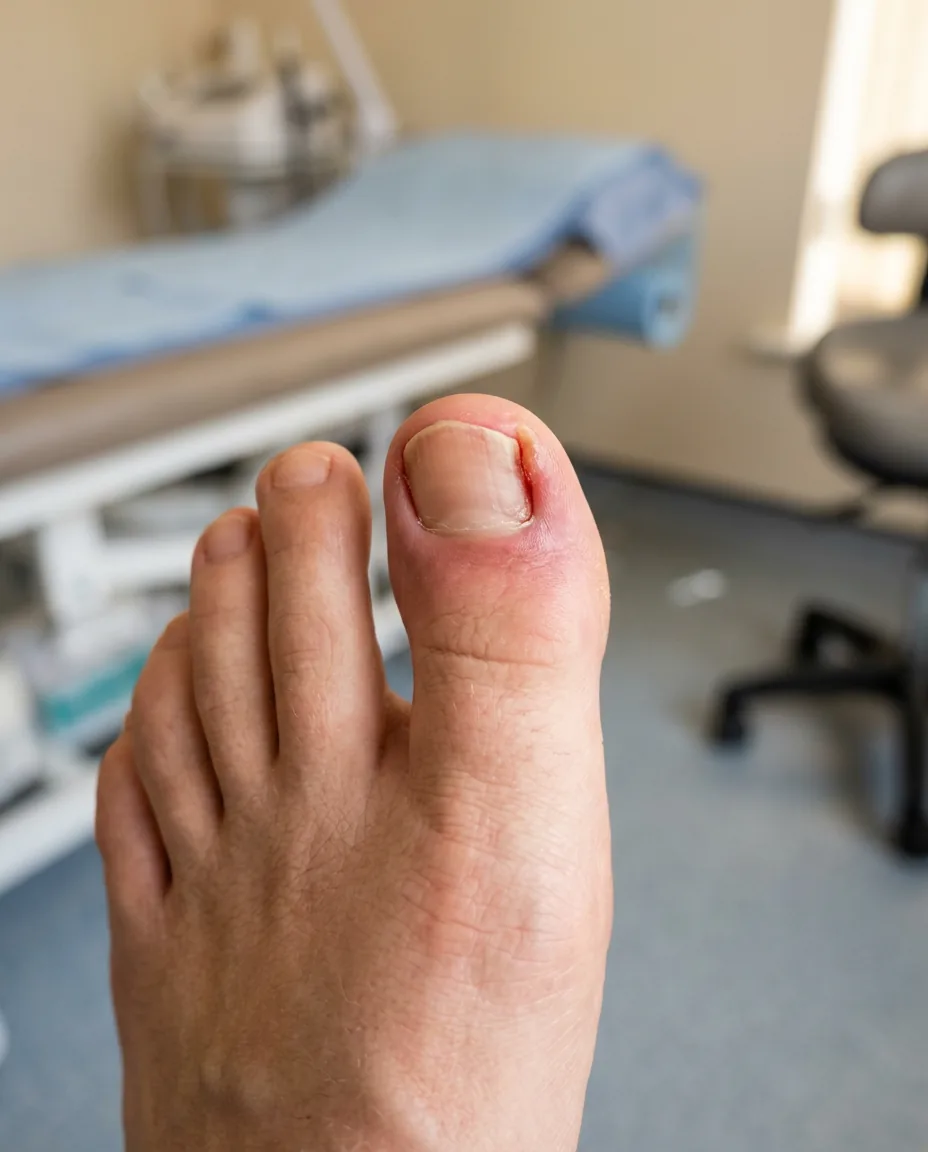
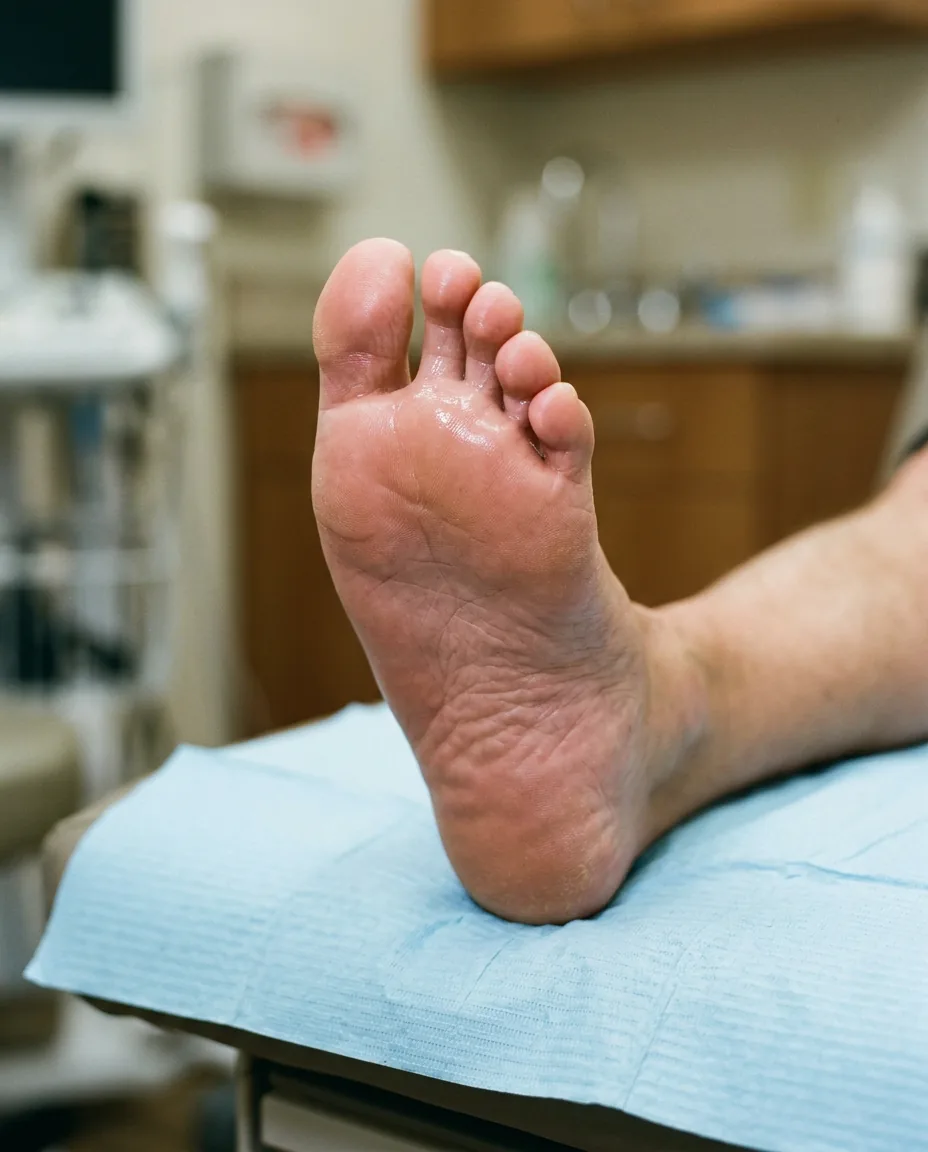
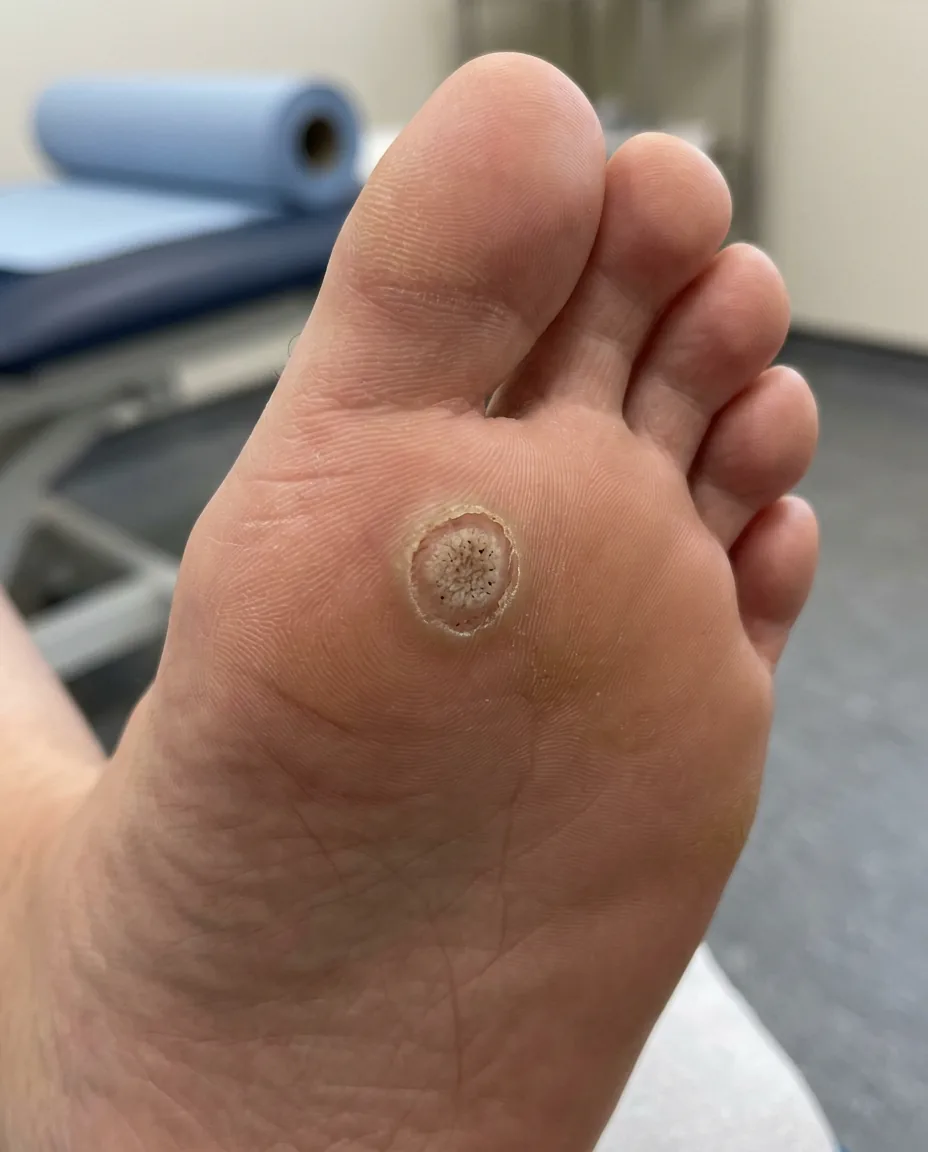
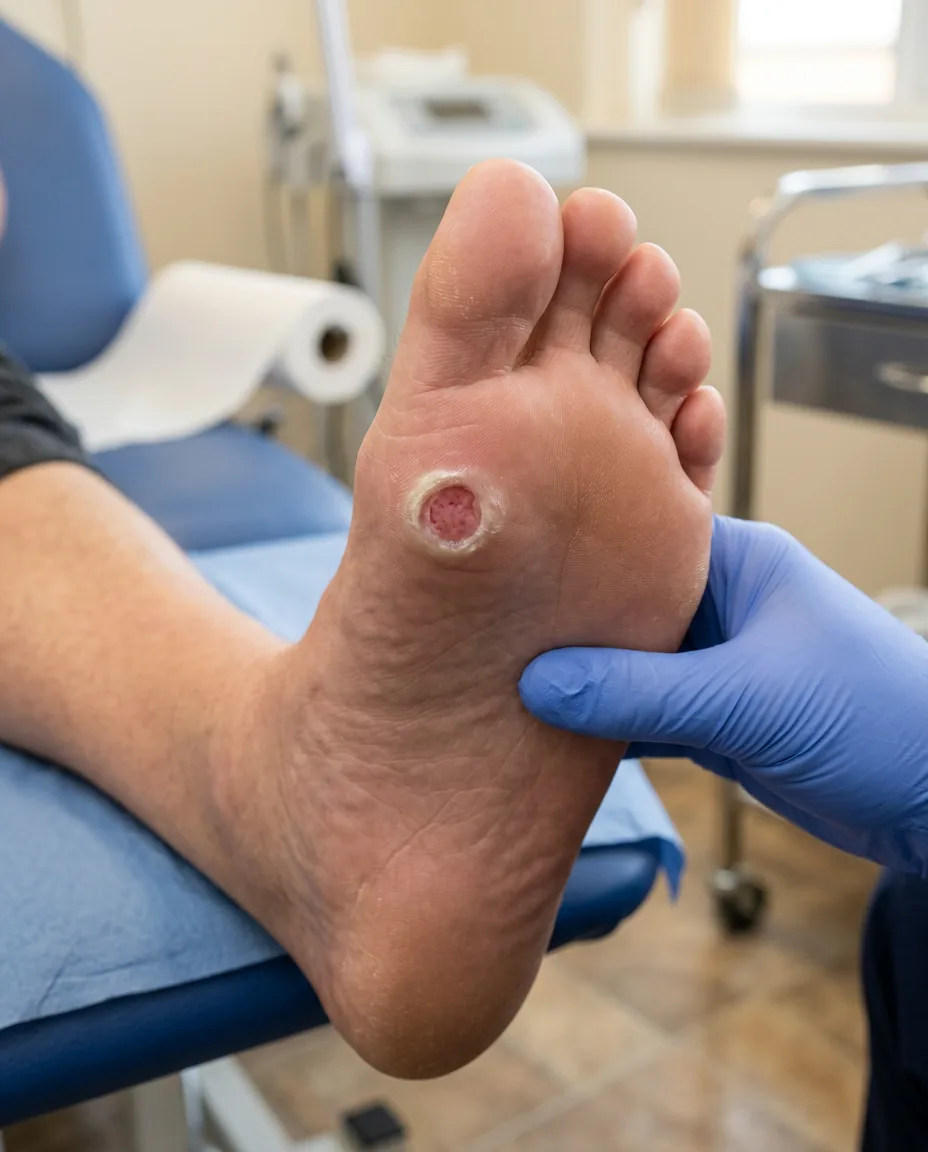
What an attack looks like.
Gout is distinctive: rapid onset, usually overnight, in a single joint that becomes red, hot and so tender that the weight of a bedsheet is unbearable. Most first attacks are in the big toe joint.
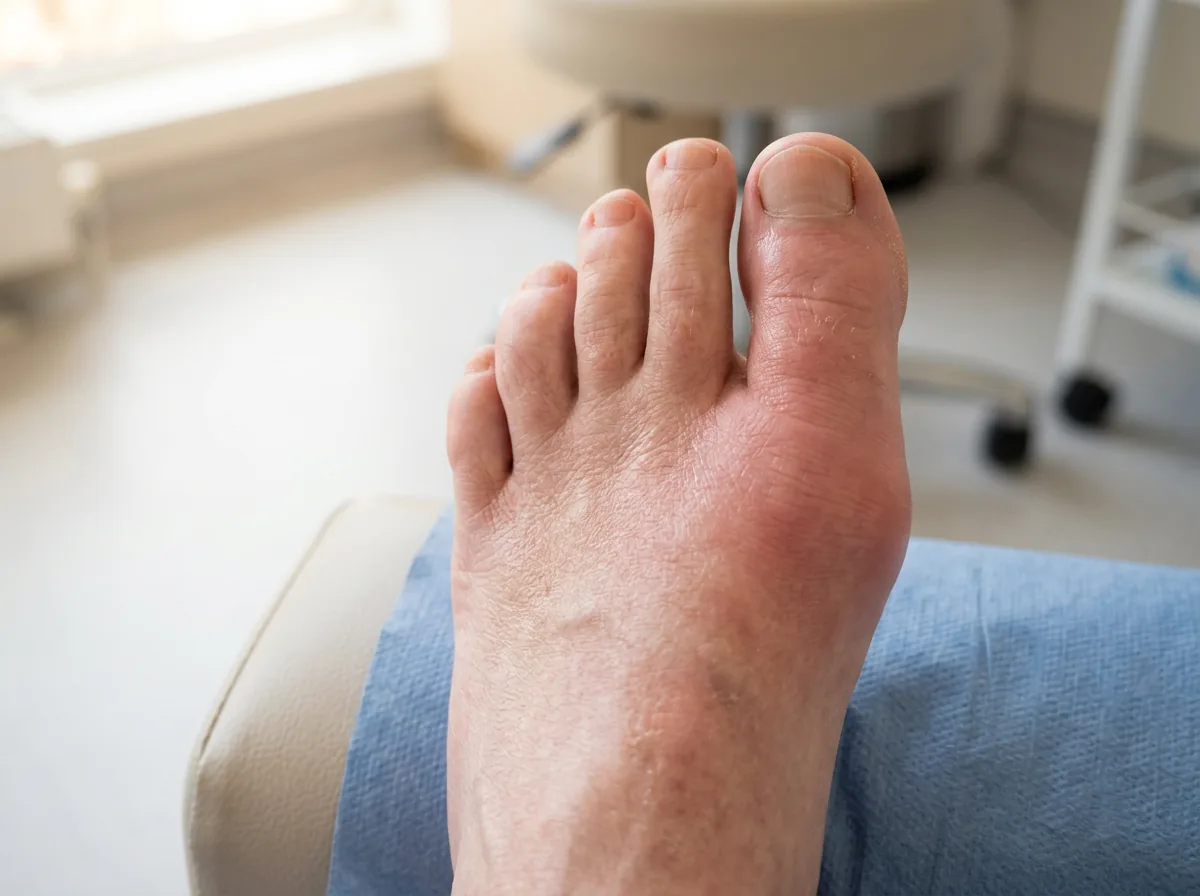
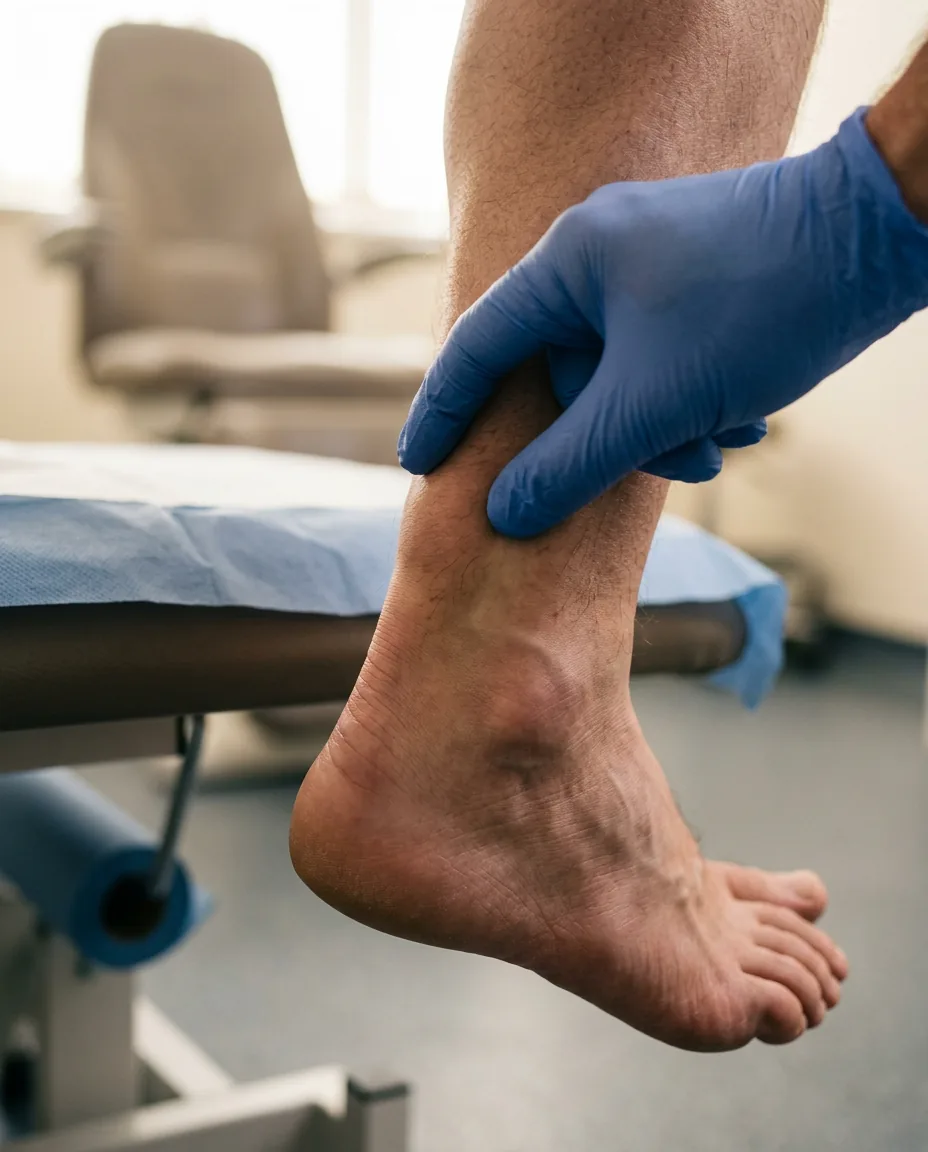
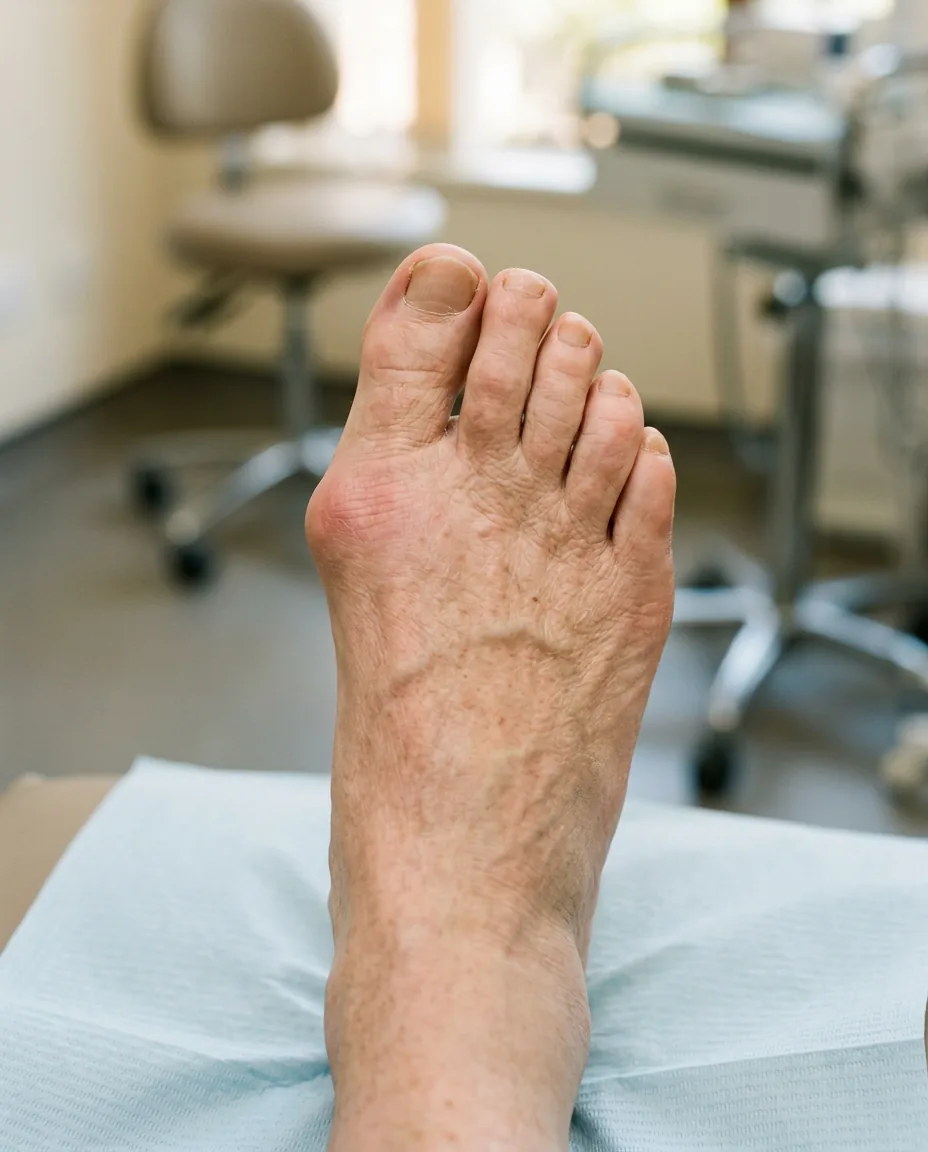
An early gout flare, the joint pink and tender — at Complete Chiropody and Podiatry in Chester-le-Street
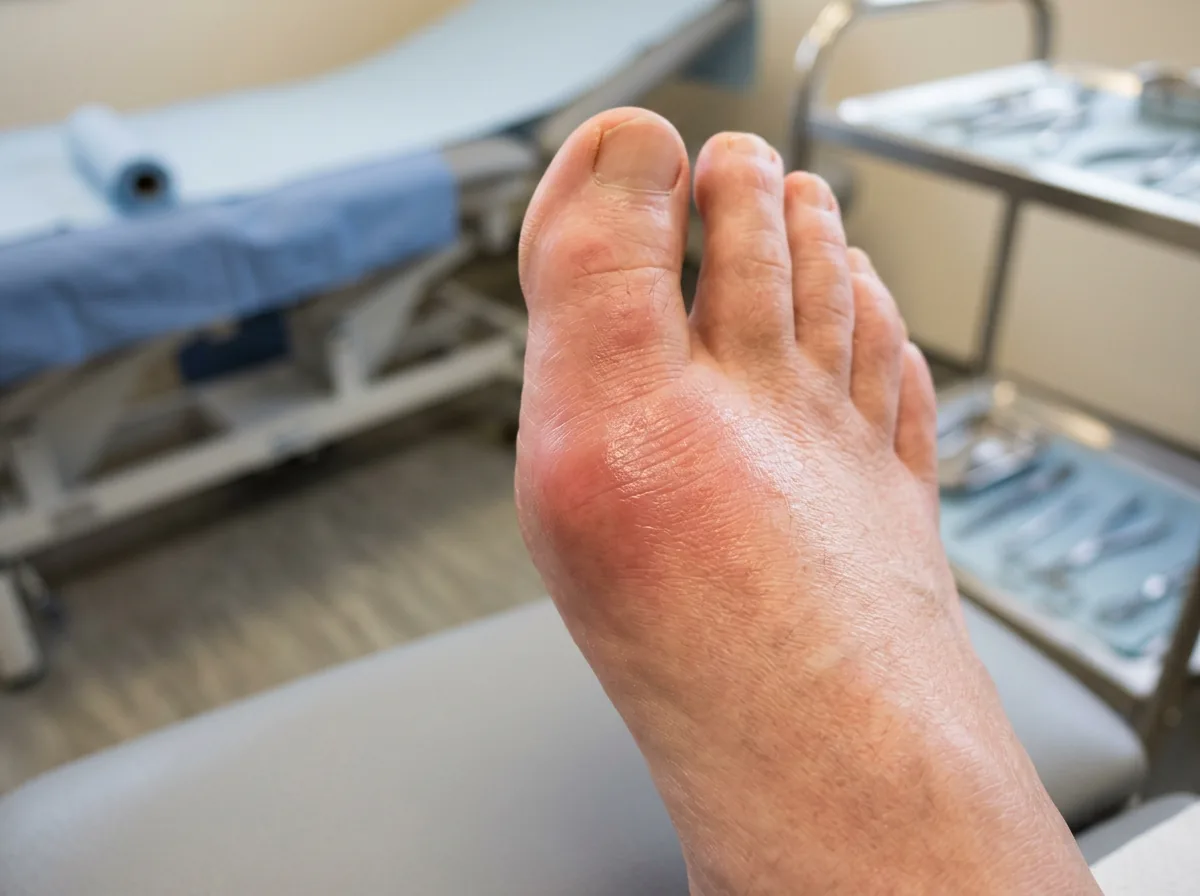
An acute gout attack, the joint red, hot and shiny — at Complete Chiropody and Podiatry in Chester-le-Street
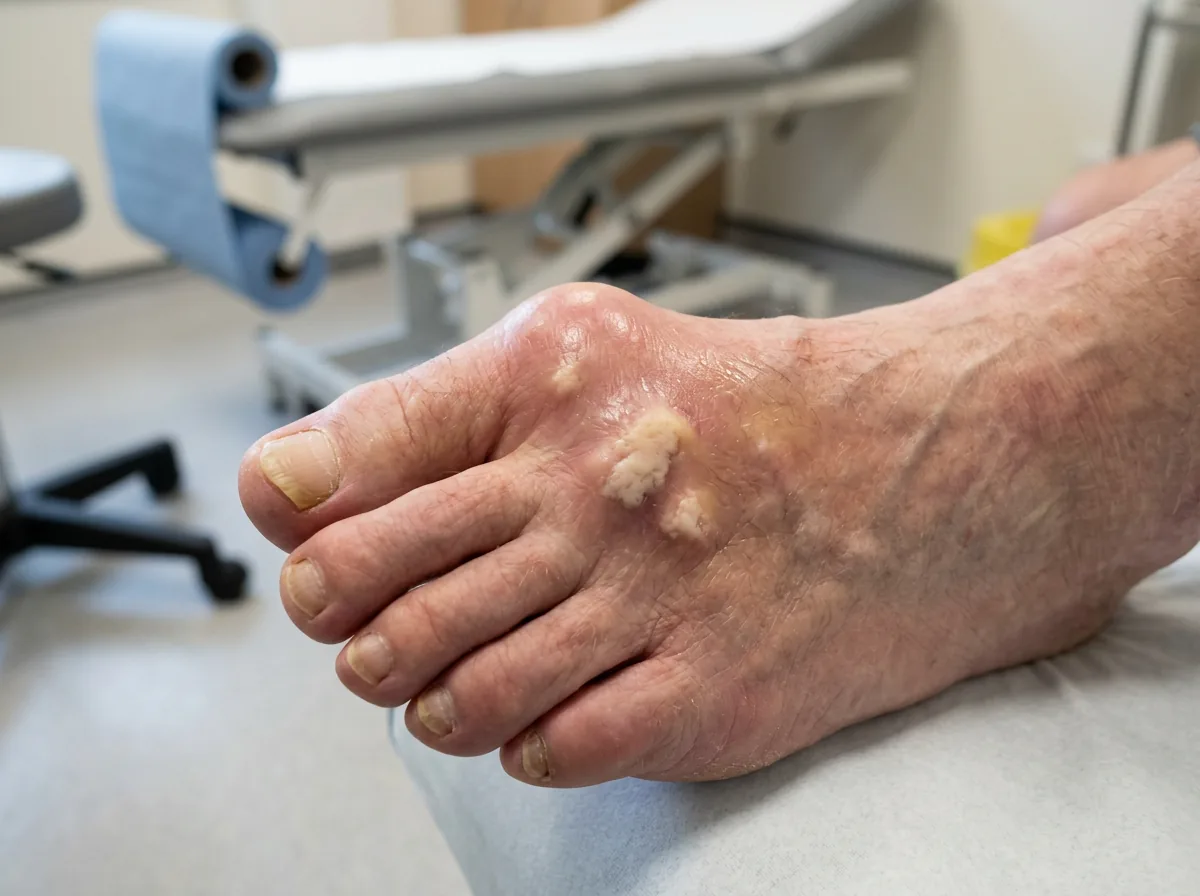
Chronic gout with firm, chalky deposits at the joint — at Complete Chiropody and Podiatry in Chester-le-Street
Treatment Information
What we do about it.
01
We recognise the pattern
The history does most of the work: how fast it came on, which joint, and whether it has happened before. What we can rule in or out at the foot matters, because an infected joint looks similar and is an emergency.
02
We rule out the thing that looks the same
A hot swollen joint can be septic arthritis, particularly if you feel unwell or feverish with it. If there is any doubt we send you for urgent assessment the same day rather than assuming gout.
03
We make the foot bearable
Protection from footwear and bedding, padding so that nothing touches the joint, and honest advice about what helps in the short term. Rest and elevation genuinely do help during an attack.
04
We get you to the right treatment
Gout is confirmed with a blood test and treated with medication, both of which come from your GP. Urate-lowering treatment is what stops the attacks and protects the joint long term, and plenty of people are never offered it. We will say so in writing.
During and after an attack
Get help the same day if…
A hot swollen joint with a fever is treated as an infected joint until proven otherwise, and that is an emergency rather than an appointment. Ring your GP or 111 the same day.
Online booking opens soon
Our appointment diary is not open just yet. Leave your details and be the first to know when it opens, so you can pick a time that suits you, evenings and weekends included.
Diary opening soonOr ring 07838 652554 and we will find you a time.

Rather talk to someone?
Ring during opening hours and you will speak to a person. Home visits are arranged this way.
Gout is monosodium urate crystal deposition, and the first metatarsophalangeal joint is involved in the majority of first presentations — podagra. Attacks are acute and monoarticular, peak within twenty four hours with erythema, warmth, swelling and extreme tenderness, and often settle over one to two weeks untreated. Diagnosis is clinical, supported by serum urate measured ideally four to six weeks after an attack, since urate can be normal or low during one; definitive diagnosis is negatively birefringent crystals on joint aspiration. Septic arthritis is the differential that must not be missed, and fever or systemic upset makes it the working diagnosis. Acute management is an NSAID, colchicine or a corticosteroid depending on comorbidity, prescribed by the GP. Urate-lowering therapy, usually allopurinol titrated to a target serum urate, is indicated after recurrent attacks, with tophi, or in gout with chronic kidney disease, and is substantially underused. Repeated attacks cause joint damage and tophaceous deposits, which is where the podiatric consequences lie: deformity, ulceration over tophi and secondary infection.
Questions
Things people ask about gout.
Partly, and diet is a smaller factor than most people are led to believe. Genetics, kidney function and some medications matter more. Cutting out everything you enjoy will not usually control gout on its own.
Your GP. The blood test and the medication both come from them, and the medication that prevents further attacks is the part that protects the joint. We deal with the foot and write to them with what we have found.
Usually a week or two untreated, and considerably less if treatment starts early. That is why it is worth having something at home ready if you get them repeatedly.
Yes. An infected joint looks very similar and is far more serious, and osteoarthritis of the same joint can flare. If you feel unwell with it, treat it as an infection and get seen the same day.
Repeated attacks can, and crystal deposits called tophi can build up under the skin and break down. That is avoidable with the right long-term treatment, which is the argument for asking your GP about prevention rather than only about pain relief.
Still have a question?
Ask it here and we will come back to you by email, usually the same working day. If it is urgent, calling is quicker.
Online booking opens soon
Our appointment diary is not open just yet. Leave your details and be the first to know when it opens, so you can pick a time that suits you, evenings and weekends included.
Diary opening soonOr ring 07838 652554 and we will find you a time.
Rather talk to someone?
Ring during opening hours and you will speak to a person. Home visits are arranged this way.
Gout
treatment in Chester-le-Street
Our clinic is in Chester-le-Street, right next to Tesco, so parking is free and it is less than a minute's walk from the car park to our door. We also see people from the towns and villages around it, and visit at home across the same area.