
Skin problems
Sweaty feet and odour
Feet that sweat heavily are a medical thing rather than a hygiene failing, and the smell that goes with it comes from bacteria rather than from sweat. Both respond well to treatment, and neither is anything to be embarrassed about telling us.
Treatment Summary
How long
30 minutes
What it costs
£35
No new patient fee.
Getting in
Free parking at the Tesco next door, under a minute's walk.
What we do
Does it hurt
No. Nothing in this appointment is uncomfortable. We look at the skin including between every toe, treat anything that has broken down, and go through what to use and when.
A short line in a patient's own words goes here, once we have a real one to use.
Placeholder — name and town go here.
What heavy sweating does to a foot.
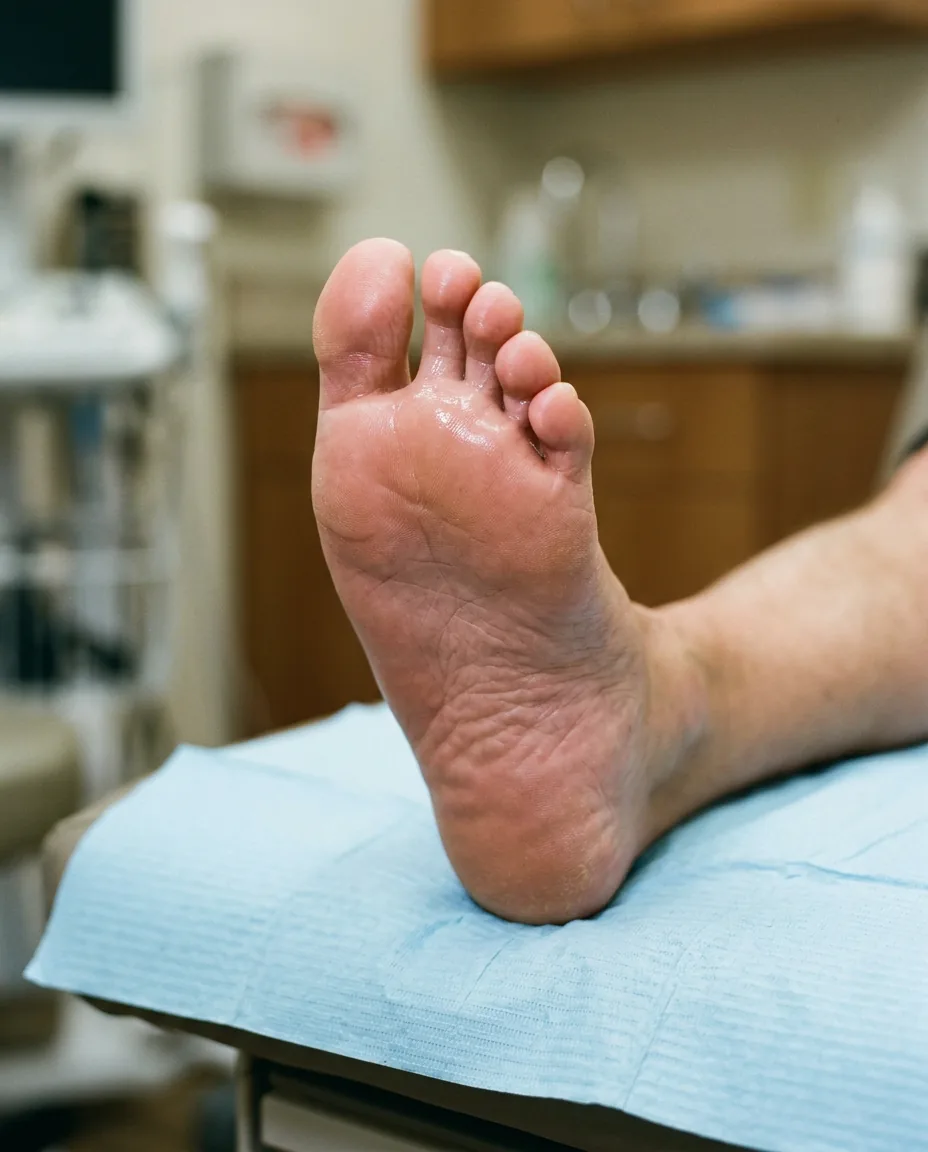
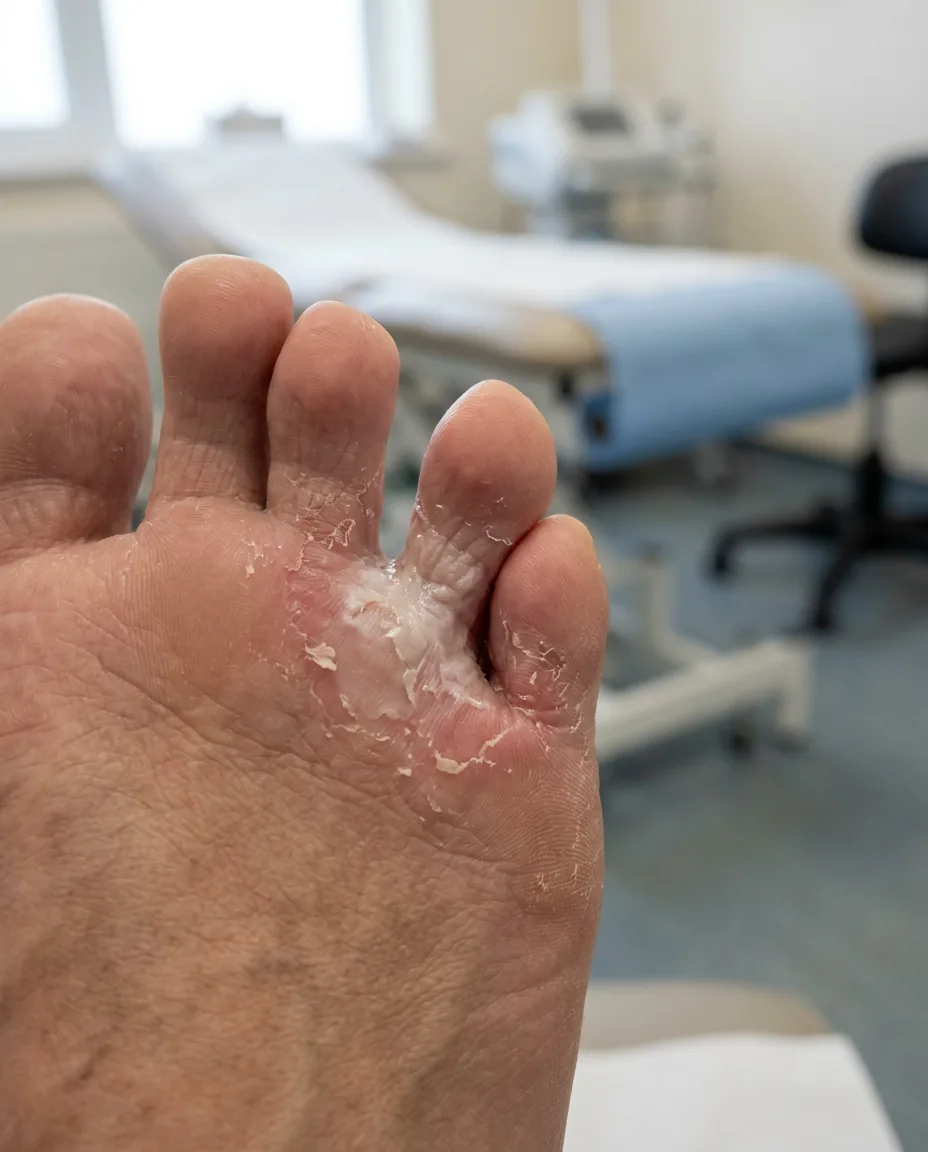
Skin that is permanently damp stops working as a barrier. It goes white and soggy between the toes, it splits, and it becomes easy ground for athlete's foot and for the bacteria that produce the smell.
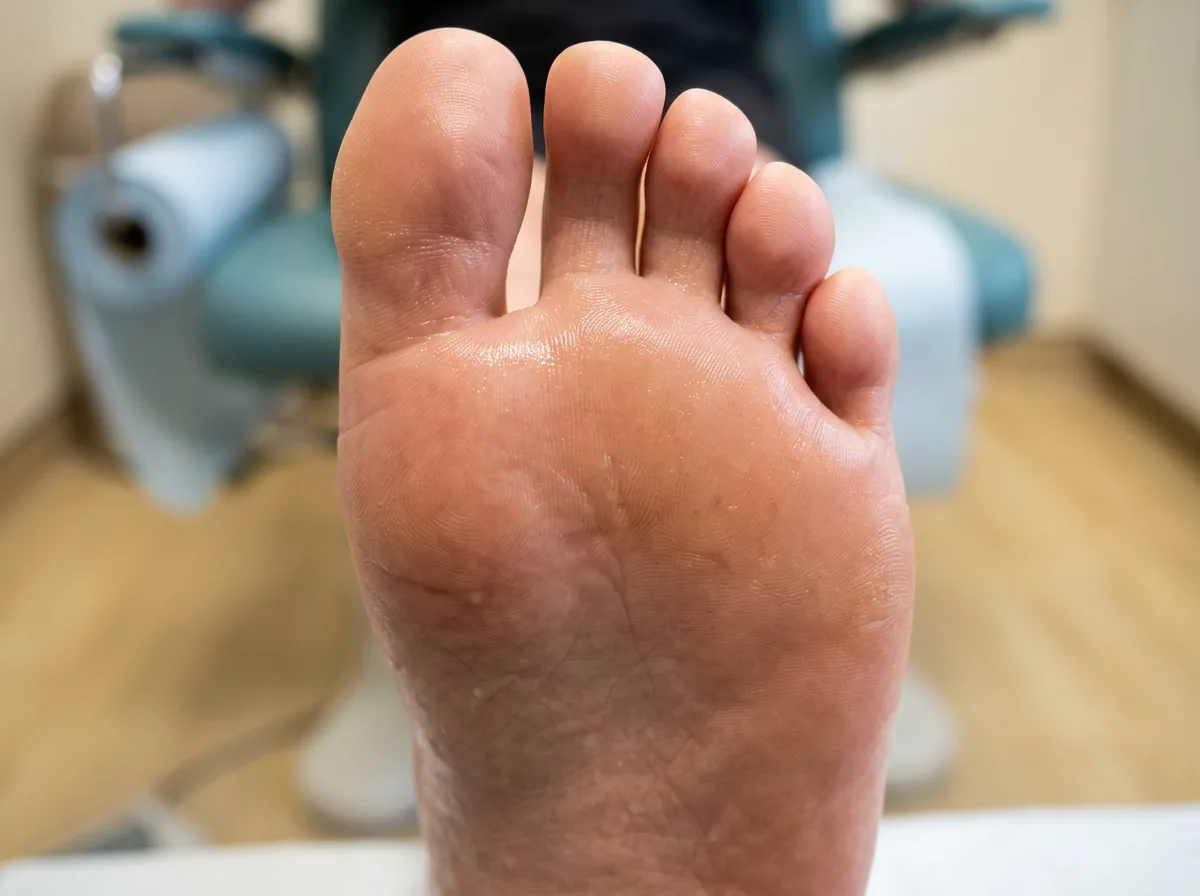
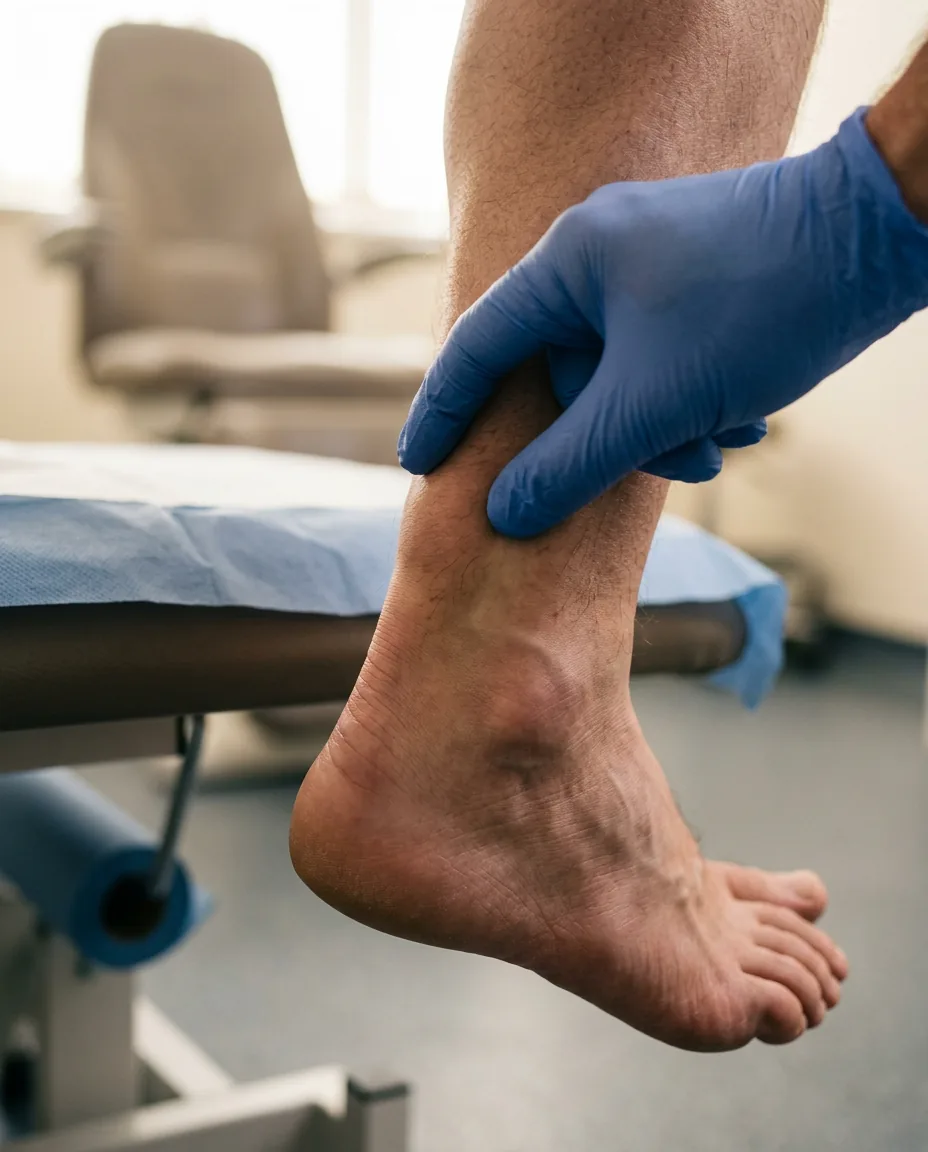
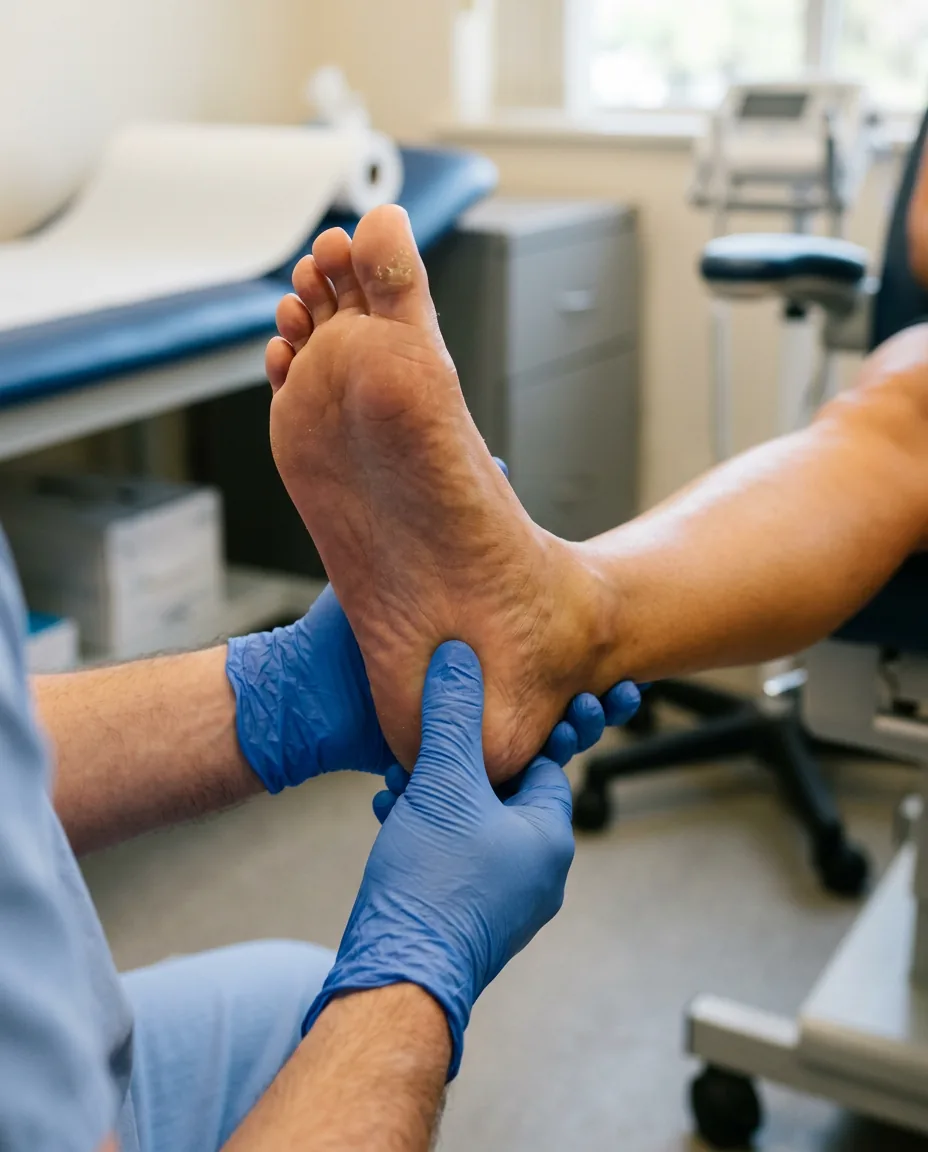
A faint sheen of moisture on the sole — at Complete Chiropody and Podiatry in Chester-le-Street
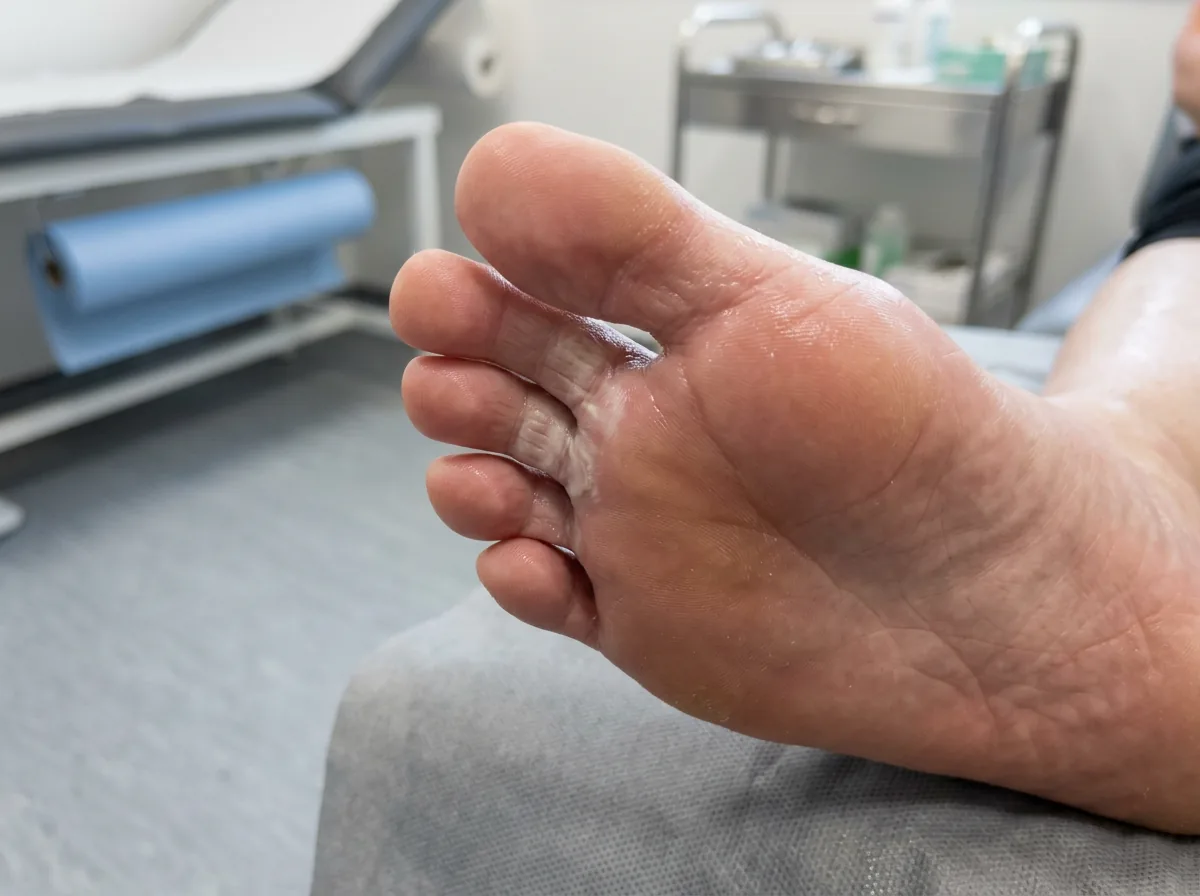
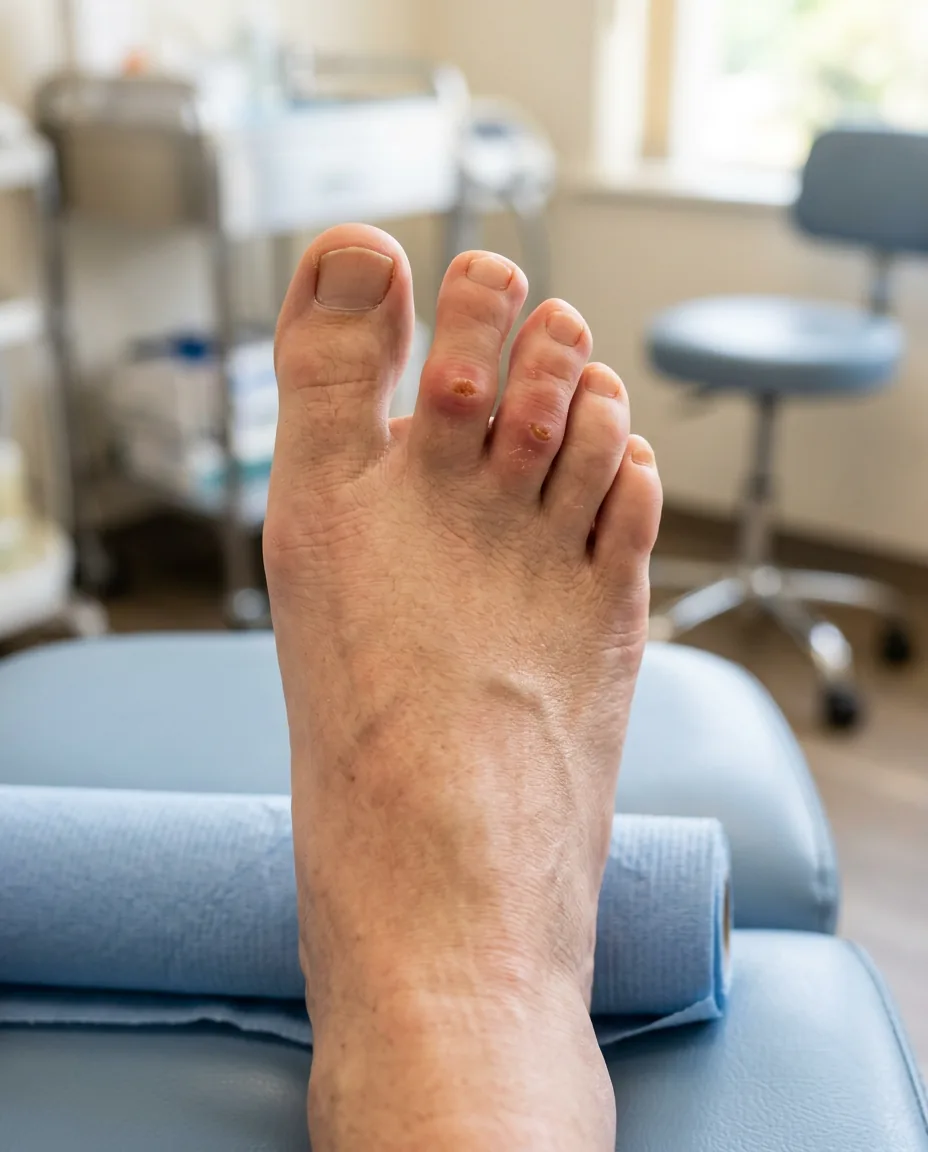
Damp, softened skin between the toes — at Complete Chiropody and Podiatry in Chester-le-Street
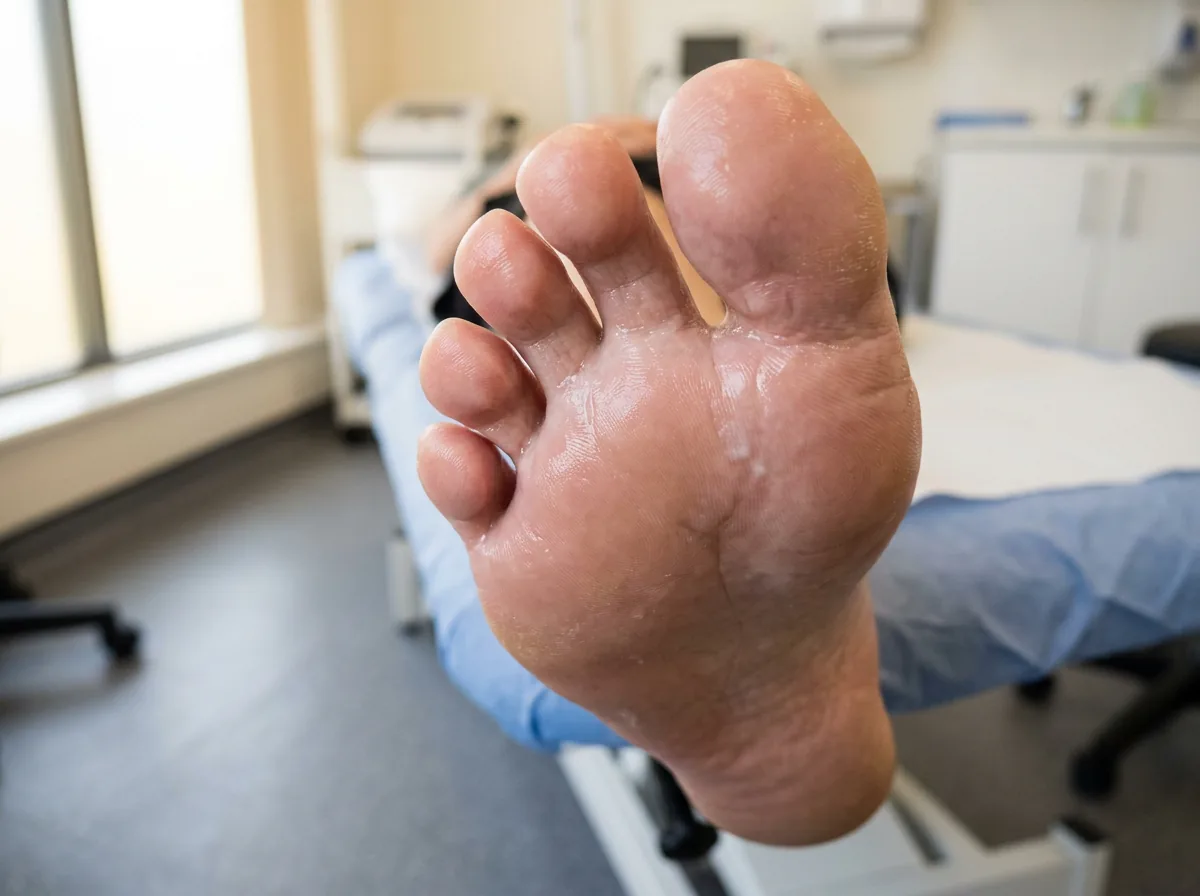
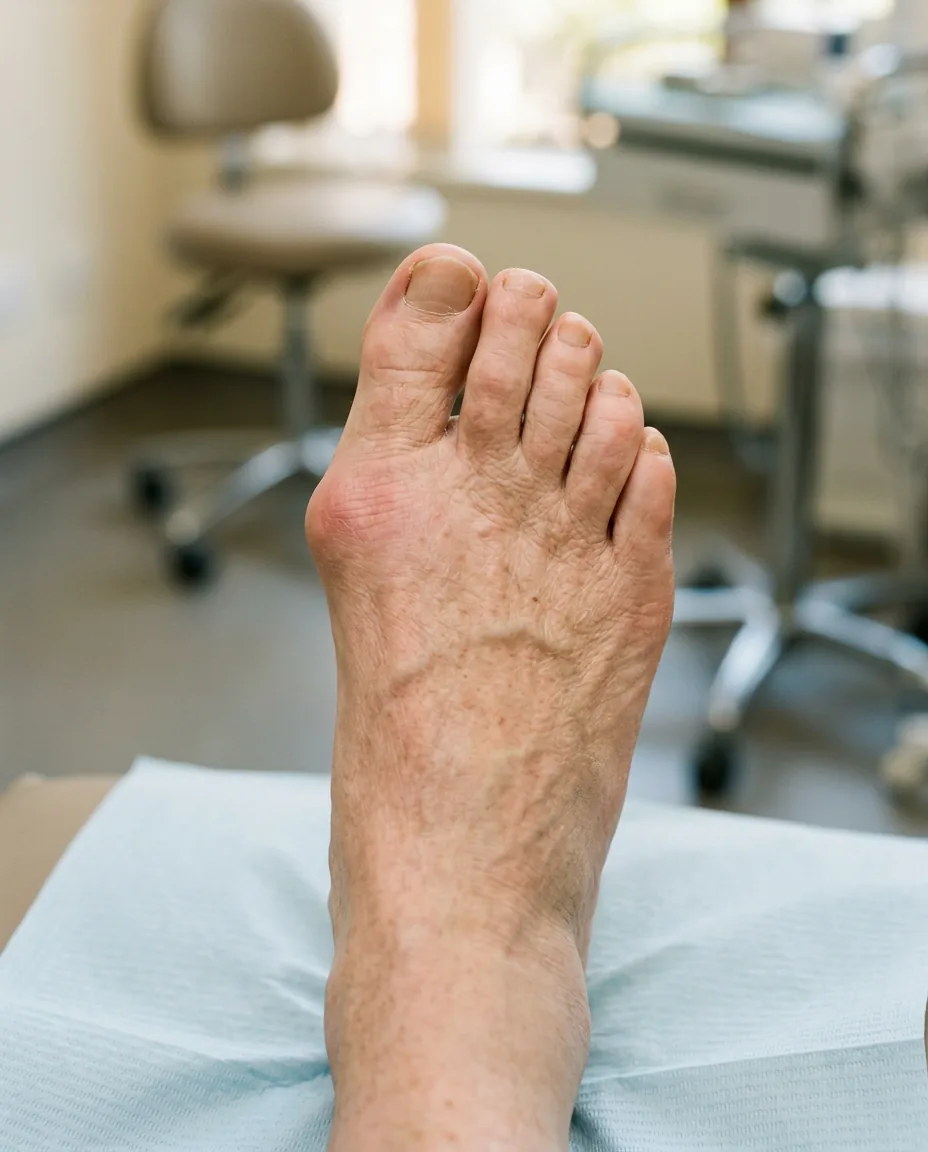
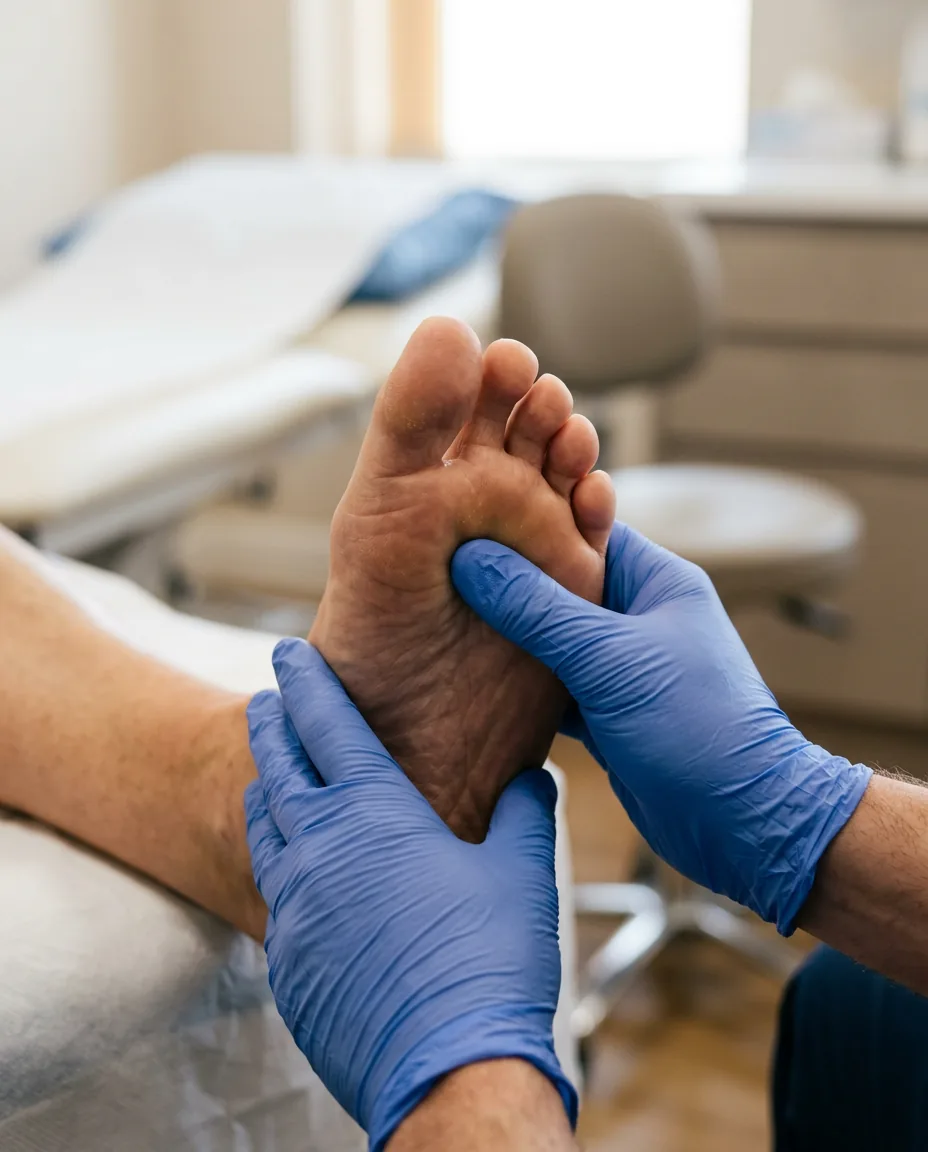
Soft, waterlogged skin across the whole sole — at Complete Chiropody and Podiatry in Chester-le-Street
Treatment Information
What we do about it.
01
We look at the skin properly
Between the toes, under the forefoot and around the heels. Sweating rarely arrives on its own — athlete's foot and pitted keratolysis, which is what those small holes in the sole are, both live on permanently damp skin.
02
We treat what is there
Any fungal infection gets treated, and pitted keratolysis clears with a topical antibiotic or antiseptic once the skin is drier. The smell usually goes with it, because the bacteria producing it are the same ones.
03
We reduce the sweating itself
An antiperspirant containing aluminium chloride, applied to dry feet at night rather than in the morning, is the mainstay and you can buy it over the counter. Used properly it works for most people within a couple of weeks.
04
We fix the shoe cycle
Two pairs worn on alternate days, a breathable upper, and socks that actually move moisture away. Shoes that never dry out will undo everything else you do.
What you can do at home
Get it looked at sooner if…
Sudden or generalised sweating is a question for your GP rather than for us, and a split between the toes is a way in for infection. Neither should be left.
Online booking opens soon
Our appointment diary is not open just yet. Leave your details and be the first to know when it opens, so you can pick a time that suits you, evenings and weekends included.
Diary opening soonOr ring 07838 652554 and we will find you a time.

Rather talk to someone?
Ring during opening hours and you will speak to a person. Home visits are arranged this way.
Plantar hyperhidrosis is usually primary and idiopathic, with onset in adolescence or early adulthood and a frequent family history; secondary hyperhidrosis is generalised and warrants investigation for endocrine, neurological or drug causes. Bromhidrosis is bacterial rather than eccrine in origin, the odour coming from bacterial breakdown of keratin and sweat into isovaleric acid and sulphur compounds. Pitted keratolysis, caused by Kytococcus sedentarius and related organisms, produces the characteristic punched-out pits and responds to topical clindamycin or fusidic acid alongside moisture control. First line treatment is twenty per cent aluminium chloride hexahydrate applied to dry skin at night when sweat duct activity is lowest, and washed off in the morning; irritation is the usual reason people abandon it and is managed by reducing the frequency rather than stopping altogether. Iontophoresis is effective in resistant cases, with botulinum toxin and oral anticholinergics beyond primary care. Interdigital maceration is a recognised portal of entry for bacterial cellulitis.
Questions
Things people ask about sweaty feet.
No. Heavy sweating is how some people's nervous systems are wired, and the smell comes from bacteria breaking the sweat down. Washing more helps a little. Controlling the moisture helps a great deal.
Most of them are deodorants, which mask the smell, rather than antiperspirants, which reduce the sweat. And the ones that do work need to go on at night, on dry feet, which is not what the packaging usually suggests.
That is pitted keratolysis, a surface bacterial infection that thrives on damp feet. It clears readily once it is treated and the moisture is under control, and it is very often the source of the smell.
Primary hyperhidrosis tends to be lifelong, but it is very manageable. Most people get it to the point where it is simply not a daily consideration any more.
Yes. If antiperspirants and a good routine are not enough, iontophoresis and prescription options exist, and we will point you and your GP in the right direction.
Still have a question?
Ask it here and we will come back to you by email, usually the same working day. If it is urgent, calling is quicker.
Online booking opens soon
Our appointment diary is not open just yet. Leave your details and be the first to know when it opens, so you can pick a time that suits you, evenings and weekends included.
Diary opening soonOr ring 07838 652554 and we will find you a time.
Rather talk to someone?
Ring during opening hours and you will speak to a person. Home visits are arranged this way.
Sweaty feet and odour
treatment in Chester-le-Street
Our clinic is in Chester-le-Street, right next to Tesco, so parking is free and it is less than a minute's walk from the car park to our door. We also see people from the towns and villages around it, and visit at home across the same area.