In short
Feet are not fixed. They get longer and wider over the years as the ligaments give a little, and the fat pad under the ball of the foot thins, which is why hard floors feel harder than they used to. Most people keep buying the size they wore at thirty.
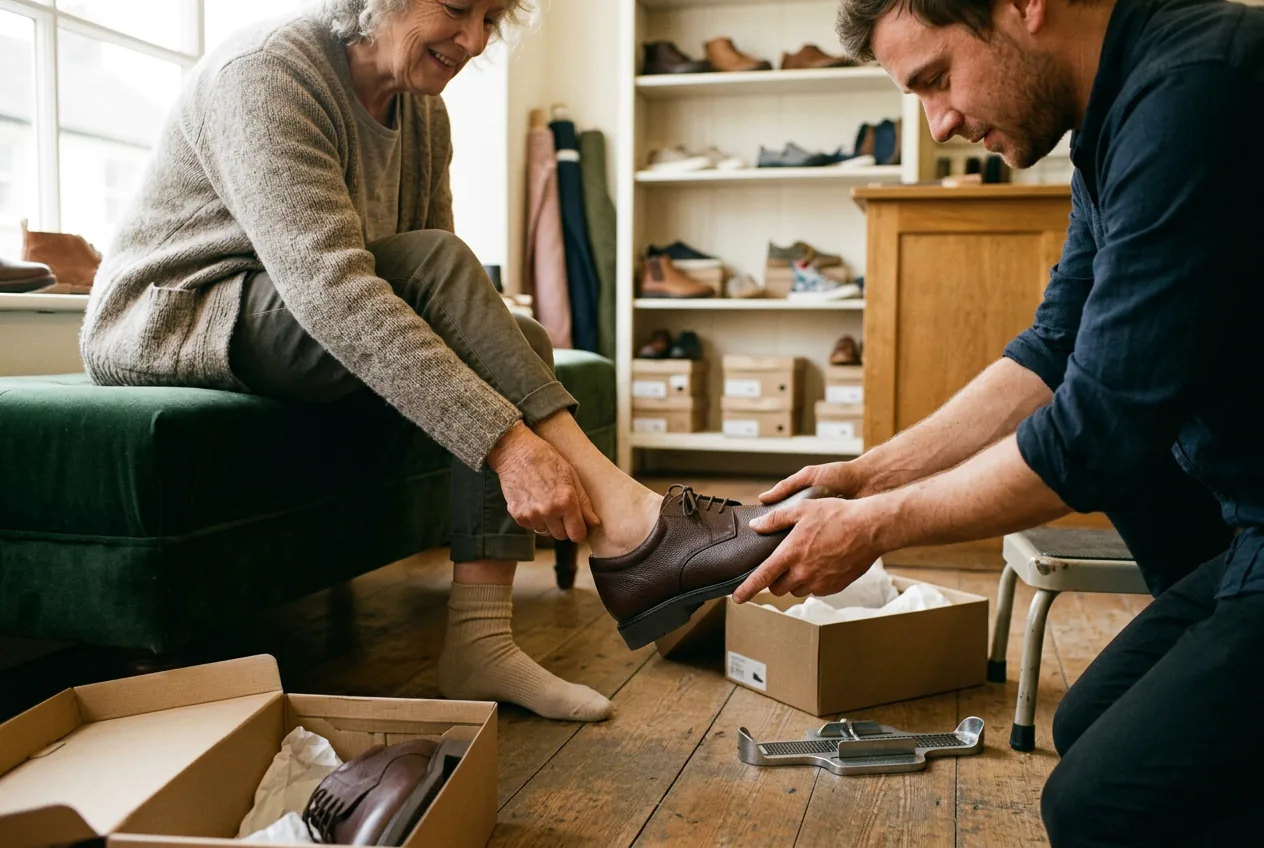
Get measured properly, standing up
Not sitting. A foot spreads under your body weight, and a shoe fitted sitting down will be tight when you stand in it. Have both feet measured, because almost everybody has one slightly longer, and buy for the bigger one.
Do it in the afternoon or evening. Feet swell through the day, and a shoe fitted first thing can be uncomfortable by teatime.
Depth matters more than length
This is the one most people have never been told. If your toes have started to buckle, or a bunion has widened the front of your foot, the problem is usually the shoe pressing down from above rather than pinching from the sides. A deep, soft toe box takes the pressure off the knuckle of a hammer toe better than anything else you can do.
The fastening is not optional
A lace, a buckle or a strap holds your foot back in the shoe. A slip-on lets it slide forward at every step, which jams the toes into the front and is a reliable way to build corns and hard skin. If you find laces difficult, elastic laces and touch-fastening straps do the same job.
Check these five things in the shop
- A thumb's width between your longest toe and the end
- The widest part of the shoe sits at the widest part of your foot
- You can wiggle all your toes without them touching the top
- The heel does not slip when you walk
- Nothing needs breaking in
That last one is worth repeating. A shoe that hurts in the shop will hurt at home. Leather softens a little, but it does not change shape enough to rescue a bad fit.
If you have a bunion
Shoes will not straighten it and no splint sold online will either. What the right shoe does is stop it hurting, which is a different and more achievable goal. Width and depth across the joint, and a soft upper over the bump. See bunions.
If you have diabetes
Take extra care with new shoes. Wear them for an hour on the first day and check your feet afterwards for red marks. Reduced feeling means a rub can become a wound before you notice it, and it is worth having any new pressure area looked at.