In short
Every week somebody arrives with a corn that is now a raw patch of skin, and a corn plaster is usually the reason. They are sold as the obvious answer and they are one of the few things we ask people to stop doing outright.
What they actually do
Most medicated corn plasters work with salicylic acid. The acid softens hard skin, which sounds ideal until you notice that it has no way of telling the difference between the corn and the perfectly good skin around it. The corn is a small, dense plug; the ring of skin surrounding it is thin and healthy. The acid works on both.
The result is often a corn that is still there, sitting in the middle of a sore, macerated patch that is more painful than the original problem.
Why that matters more for some people
On a healthy foot with good circulation, the worst case is usually a sore fortnight. If you have diabetes, poor circulation or reduced feeling in your feet, an acid burn is a break in the skin that can be slow to heal and easy to miss. That is the situation nobody wants, and it starts with a two-pound purchase.
If any of those apply to you, do not use them at all.
What actually removes a corn
A corn is a response to pressure. Take the pressure away and it stops rebuilding; leave the pressure and it will come back however you remove it.
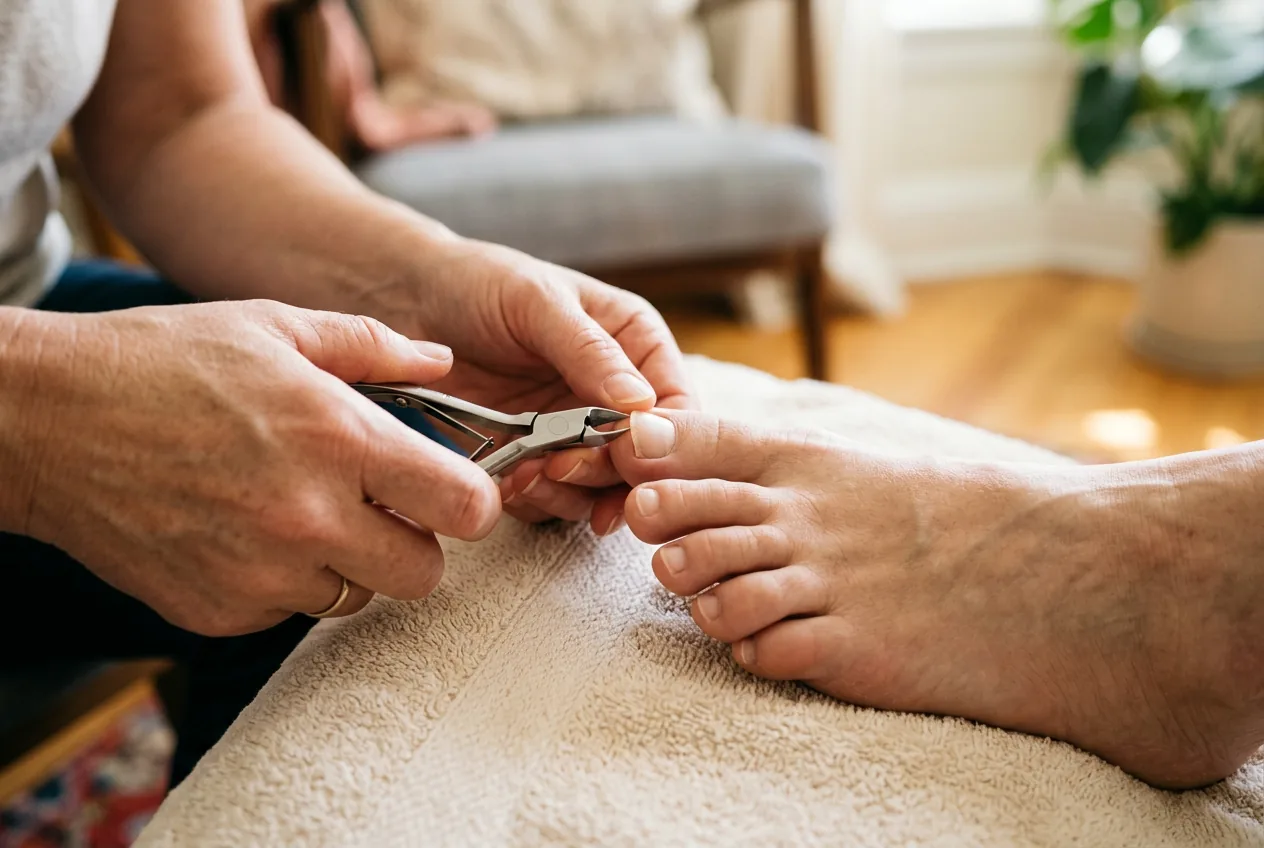
In practice that means two things done together. The corn itself is pared away with a sterile blade, which takes a few minutes and does not hurt, because there is no feeling in hard skin. Then the pressure that caused it gets dealt with: usually a different shoe, sometimes a silicone prop or a pad, occasionally an insole.
Removing it without changing anything is treating today. Changing what presses on it is treating next month. See corns.
What is reasonable to do at home
- Moisturise daily, which keeps the surrounding skin supple
- Wear shoes with room across and above the toes
- Use a pumice or a foot file gently on damp skin, if your circulation and feeling are normal
- Leave anything sharp well alone
If a corn is painful enough that you are reaching for the chemist shelf, it is worth thirty minutes with somebody who can take it out properly and tell you why it grew.